
Pediatric Eye Care at Chico Eye Center
Your Pediatric Eye Care Specialists in Chico
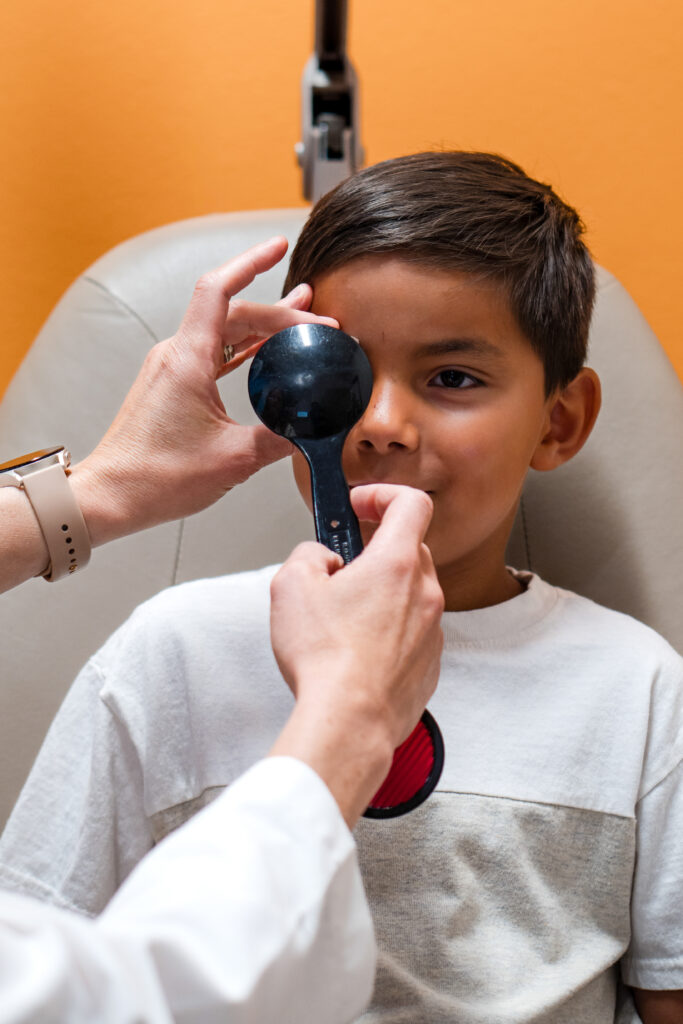
Chico Eye Center is home to the area’s only fellowship-trained pediatric ophthalmologist, as well as an optometrist with a special interest in caring for children.
As a pediatric ophthalmologist, Dr. Ransbarger focuses on complex cases requiring medical and surgical management.
As an optometrist with a pediatric focus, Dr. Grewal uses her expertise to provide children with up-to-date glasses and contact lenses, while also providing prompt evaluation of most new referrals.
Both are well-trained to provide a comprehensive pediatric eye exam and are passionate about helping children of all ages achieve their fullest vision potential.
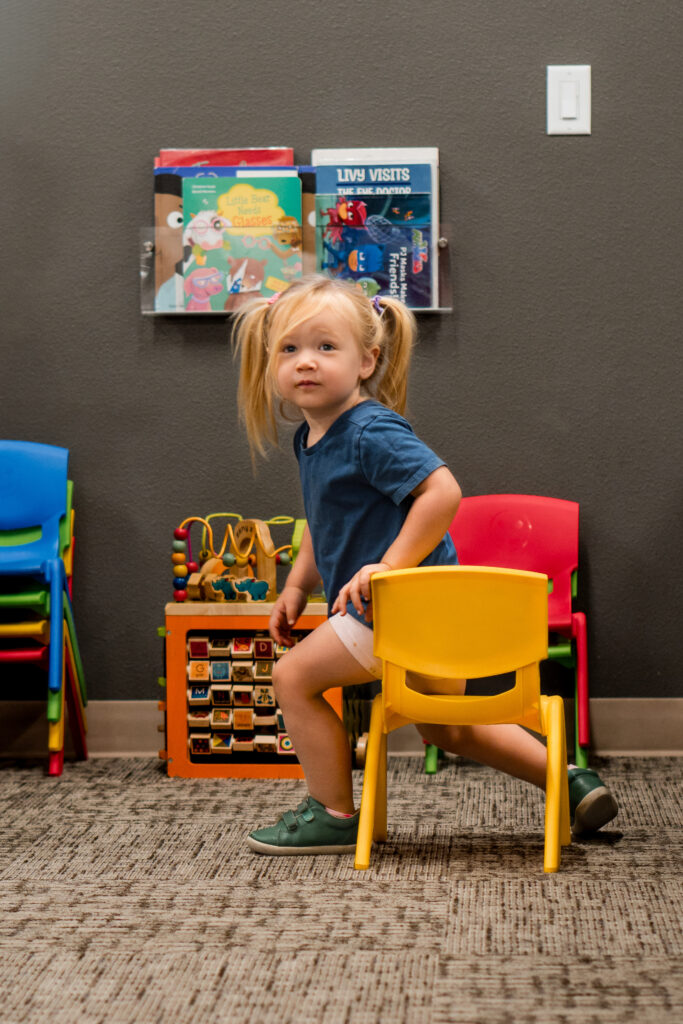
The team at Chico Eye Center is dedicated to welcoming children into a space designed just for them while providing professional service that puts both you and your child at ease. A child’s first eye exam is thorough and typically involves placing eye drops that dilate the pupils. Dilation allows the doctor to check the glasses prescription and assess the health of the inside of the eye. As the dilation medication requires 30 minutes to take effect, you will have an opportunity to relax in our kid-friendly waiting area or spend some time at the park across the street. Families should plan for the pediatric eye exam to last approximately 2 hours, allowing adequate time for dilation and choosing glasses from the optical department, if indicated. Our staff is happy to answer any questions you have about what to expect during a pediatric eye exam.
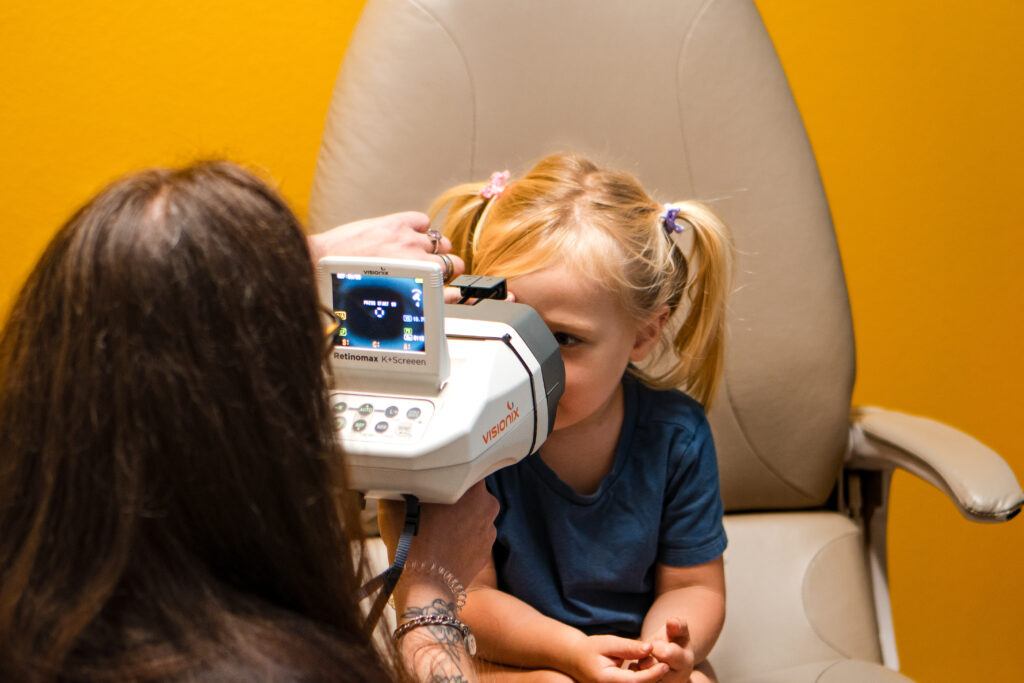
If your child is having vision or eye symptoms that concern you, it is a good idea to schedule an evaluation. These symptoms may include eye redness, tearing, squinting or eye misalignment. Older children may also report blurry vision during visual tasks. Children also undergo vision screening exams at school and with their pediatrician. These screening exams can detect concerns that do not have noticeable symptoms. If a child fails a vision screening exam, it is important to schedule a comprehensive eye exam. Lastly, a full exam is also recommended for children with a personal or family history of a medical condition that can lead to a childhood eye problem.
Strabismus is the term for eye misalignment. There are multiple forms, including crossing (esotropia), wandering (exotropia), and vertical deviation (hypertropia). While this is a common childhood eye condition, strabismus can also affect adults. Strabismus can be constant or intermittent and may cause double vision (diplopia), especially in older children and adults. A full eye exam is needed to determine the underlying cause of strabismus, as there are many. Prompt treatment is often warranted since strabismus is a leading cause of amblyopia (vision loss) in young children, as their brain may start to ignore the deviated eye. Treatment options vary depending on the type of strabismus and can include glasses (with or without prisms) and eye muscle surgery.
Further information on Eye Muscle Surgery
Nasolacrimal duct obstruction is a blockage of the normal drainage of tears into the nose. It affects approximately 5% of newborns and leads to constant tearing, discharge around the eyes, and redness of the eyelids. Symptoms are often worse upon awakening. Eye infections are rare, though this condition is often mistaken for one. More than 90% of cases resolve spontaneously by the age of 12-18 months. If resolution does not occur by that time, a procedure can be done under anesthesia to open the nasolacrimal duct obstruction. The procedure can also be performed on young infants in the clinic when cases are severe and parents prefer not to wait for spontaneous resolution.
Myopia is a type of glasses prescription (refractive error) that occurs when the shape of your eye causes light to focus in front of the retina. This is often called nearsightedness, as individuals can focus on things up close while objects in the distance remain blurry. Myopia is increasing in prevalence among children. As children’s eyes will continue to grow through their teen years, myopia can continue to increase – often reaching very high levels. Spending time outside each day and limiting prolonged near activities can decrease the rate of eye growth. Several other treatments slow down the progression of myopia, such as atropine, MiSight and Stellest lenses.
Atropine: Atropine eye drops are a form of treatment used to slow the progression of myopia in children. It works as a receptor blocker, regulating and preventing the elongation of the eyeball that causes the refractive error.
MiSight®: MiSight 1-day soft contact lenses are designed to slow the progression of myopia in children with treatment initiation starting between 8-12 years old. MiSight’s ActivControl® Technology uses two correction zones that create a myopic defocus guiding light to focus properly at the front of the retina.
Stellest Lenses: Essilor® Stellest® is the first and only FDA market-authorized spectacle lens that prevents myopia progression. Stellest lenses are worn daily like regular glasses. The Stellest lens’s unique Highly Aspherical Lenslet Target (H.A.L.T.) technology corrects vision and slows the progression of myopia in children aged 6-12. The lenslets work by shifting the focus of peripheral light, signaling the eye to stop growing longer.
A Trusted Source: AAPOS
The American Association for Pediatric Ophthalmology and Strabismus (AAPOS) is a trusted source to learn more about pediatric eye conditions.

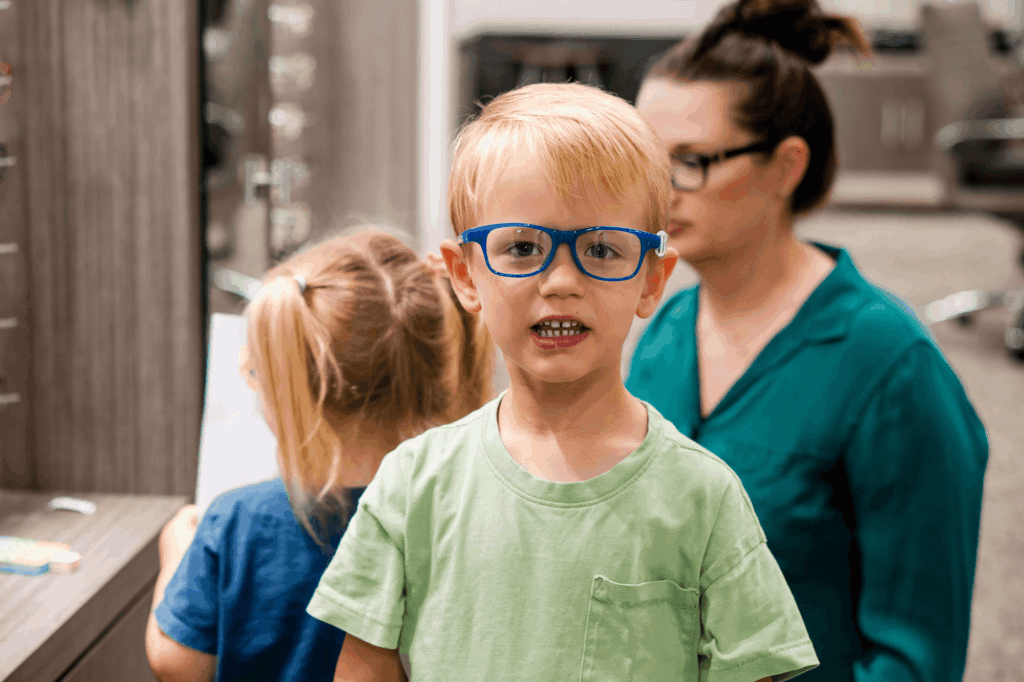
Chico Eye Center’s Optical Boutique has the largest selection of quality eyewear from Sacramento to Redding, boasting a full line of frames, including sunglasses, for children and teens. Some brands even include a 3-year warranty for breakage – extremely valuable for active kids!