
Chico Eye Center is proud to offer advanced cataract treatments with the skill and compassion of Chico’s most experienced cataract surgeons.
A cataract is a clouding of the natural lens inside the eye. Our natural lenses are clear when we are young and gradually become cloudy as we age due to a change in the lens protein, comparable to a frosted window or dirty windshield. Cataracts are a normal part of aging, but each eye can progress at different rates and often gradually. The vision change may not be obvious to the individual.
Cataracts are the leading cause of blindness worldwide, but in the U.S., surgery is usually performed well before they reach this advanced stage. Cataract surgery with intraocular lens implantation is the most commonly performed surgery in the U.S., with more than 2.5 million people per year undergoing the procedure.
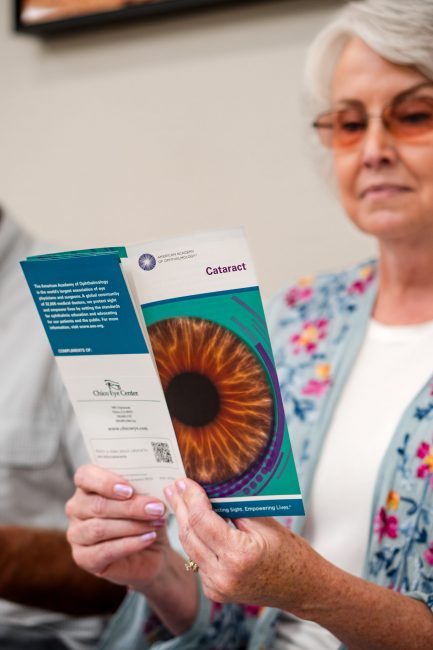
Cataract development varies among individuals and may differ between the two eyes. The vast majority of cataracts are associated with aging, most commonly becoming visually significant over 65 years of age. However, cataracts are not limited to age and can be caused by the following factors:
Cataract symptoms depend on the severity of the clouding or density of the lens. Many people have cataracts and are not aware of any decline in vision. It is important to have a thorough eye examination by your ophthalmologist or optometrist to help detect the presence and extent of a cataract.
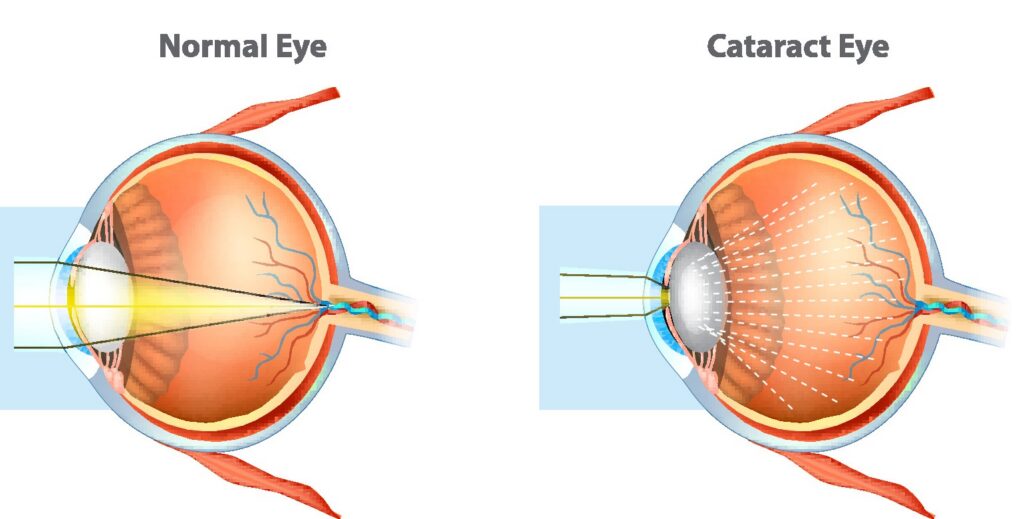
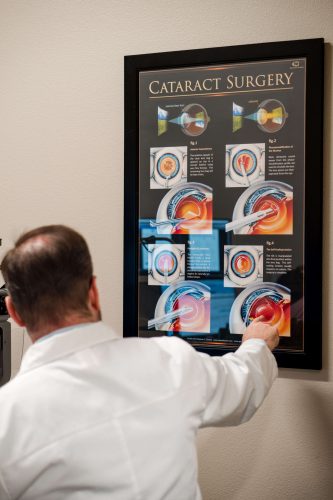
The only treatment for cataracts is cataract surgery. Cataract surgery works by removing the cloudy lens and replacing it with a synthetic intraocular lens (IOL). There are no medications, dietary supplements, exercises or optical devices that have been proven to prevent or cure cataracts.
Chico Eye Center offers standard cataract surgery, custom cataract surgery and laser-assisted cataract surgery as well as a variety of intraocular lenses to fit your vision needs and lifestyle. You’ll discuss these options during your cataract consultation and our surgical coordinators will review your insurance coverage, out-of-pocket expenses, and financing options.
If you or a loved one is experiencing cataract symptoms, request a cataract consultation with one of Chico Eye Center’s experienced cataract surgeons today.
Cal was broadcasting high school football games and stopped being able to read the jersey numbers. His optometrist referred him to Chico Eye Center for cataract surgery, and he is so thankful to have his vision back.
Monofocal IOLs provide a single fixed focusing distance correcting near, intermediate, or distance vision – but not all three. These are covered by medical insurance (deductibles & co-pays apply).
Toric IOLs correct astigmatism or irregularities in the shape of the eye. Many lens types, including monofocal and multifocal IOLs, come in toric versions.
Multifocal IOLs correct multiple focusing points, addressing near and distance vision. There are several options to choose from.
Chico Eye Center has the most experienced Light Adjustable Lens (LAL) cataract surgeons in Northern California. The LAL is the first and only IOL that can be adjusted after cataract surgery to refine your vision to be truly customized to your lifestyle. The LAL can correct nearsightedness, farsightedness and astigmatism.
| Types of IOLS | Monofocal IOL | Multifocal IOL | Multifocal Toric | Toric | Light Adjustable Lens |
|---|---|---|---|---|---|
|
Distance Vision Correction |
Very Good |
Very Good |
Excellent |
Excellent |
Excellent |
|
Near Vision Correction |
None |
Excellent |
Very Good |
None |
Excellent |
|
Astigmatism Correction |
None |
None |
Very Good |
Very Good |
Excellent |
|
Glasses-free success rate (both eyes) |
5-10% |
80% |
90-95% |
10-20% |
90-95% |
|
IOL cost covered by insurance if medically necessary |
Full |
Surgical Portion Covered |
Surgical Portion Covered |
Surgical Portion Covered |
Surgical Portion Covered |
|
Duration of Effect |
Permanent |
Permanent |
Permanent |
Permanent |
Permanent |
No. With a basic intra-ocular implant (IOL), you will still need glasses for reading and may need glasses for distance depending on certain ocular findings you may have. With advanced technology IOLs (multi-focal or adjustable), you will be less dependent on glasses, but there will still be situations or occasions when you will need glasses. With these high-tech IOLs, most people are glasses independent 90% to 95% of the time. Also, you may develop other eye conditions after cataract surgery that may require using glasses to optimize your vision.
No. Whether we do laser assisted cataract surgery or traditional cataract surgery, the cataract itself is always removed with ultrasound energy. Lasers are only used to make the incisions during the surgery and to fragment the lens in the eye. Overall, laser assisted cataract surgery has not been shown to be safer or more effective in removing cataracts.
No. The anesthesia personnel will make sure you are comfortable, relaxed, and pain free during the surgery. In addition, you will receive special numbing drops that will help eliminate any pain. You may notice a scratchy sensation on your eye for 8 to 24 hours after surgery. This can be treated with artificial tears or Tylenol, but most patients don’t feel the need to do any treatment. This scratchiness almost always resolves by the next morning.
No. You will get “twilight anesthesia”, also known as monitored anesthesia. You will be completely relaxed and comfortable during the surgery. Since the surgery is relatively quick, there is no need to put patients through the stresses and risks of a general anesthetic.
Generally, the results of cataract surgery will last the rest of your life. With aging, you may develop other eye conditions that may affect your eyes and your vision. The most common of these is getting a cloudy membrane (capsule) behind the lens implant. Your doctor can easily fix this with a quick, painless laser treatment.
No. Once the cloudy lens of the eye (cataract) has been removed it will never grow back.
The length of cataract surgery depends on your cataract; some denser cataracts take a little longer. Generally, surgery takes around 10-15 minutes. However, you will be at the surgery center for about 1½ hours.
This depends. Most people begin to see better within 24 hours. However, everyone heals differently and uniquely. Also, some cataracts are denser and more advanced and will require more recovery time. In addition, other medical conditions may delay the healing process. Most people are fully recovered within 2 weeks.
Insurance companies typically pay a flat rate for your cataract surgery lens. This will fully cover the cost of a basic monofocal lens. However, it will only cover part of the cost of the more expensive advanced technology lenses. You will need to cover the cost of the difference.