
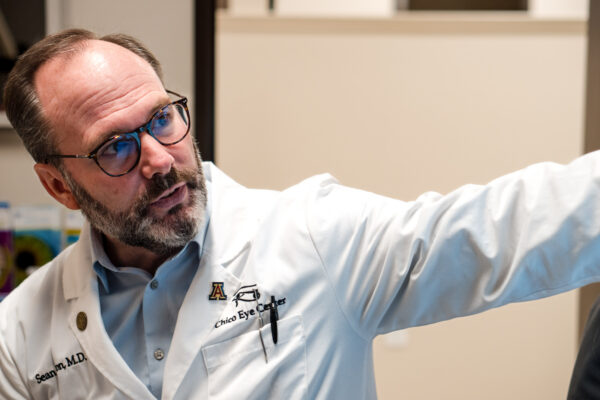
Chico Eye Center has the only corneal specialist between Redding and Sacramento.

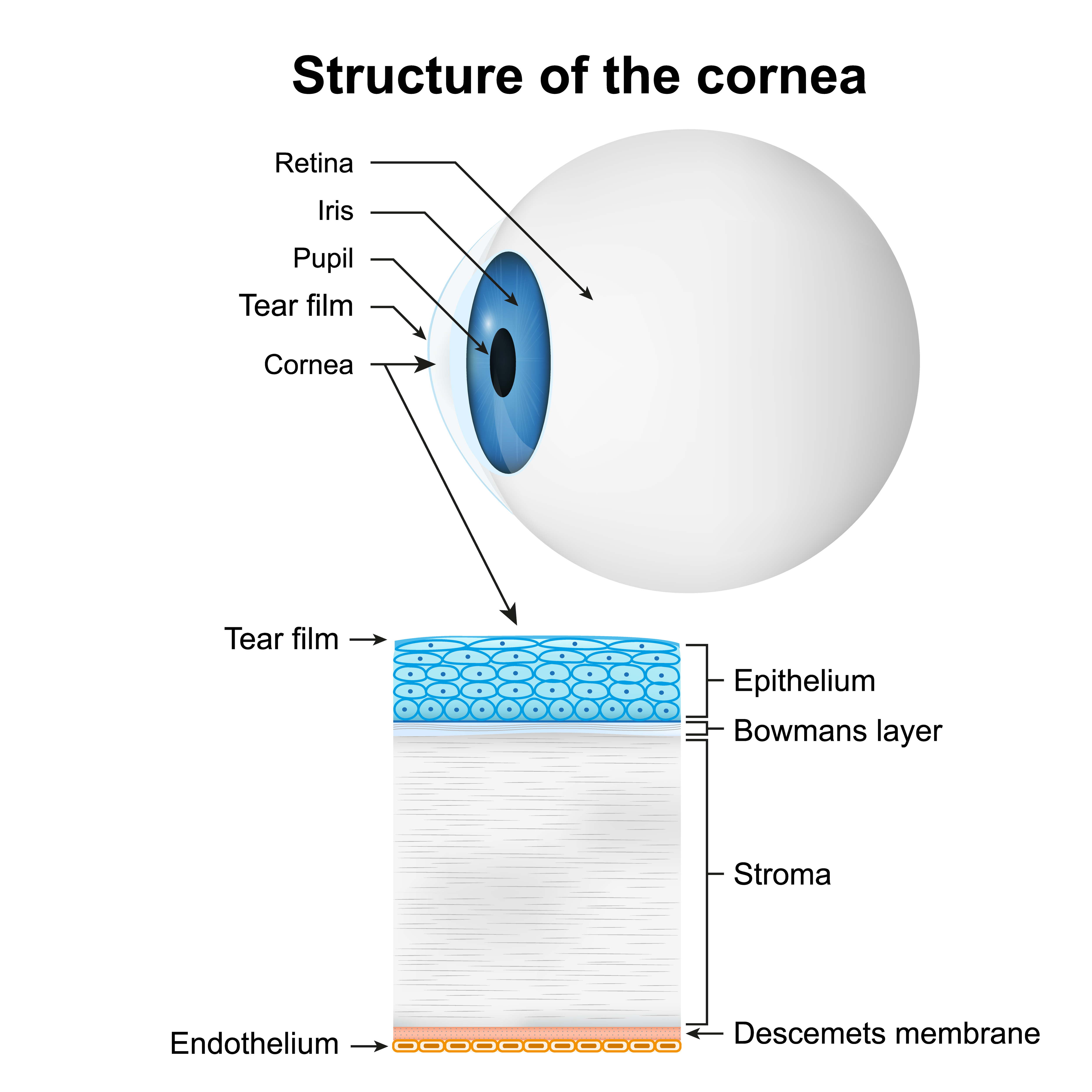
The cornea is a thin, clear, spherical layer of tissue on the surface of the eye that provides a window for light to pass through. In a healthy eye, the cornea bends or refracts light rays to help them focus precisely on the retina in the back of the eye.
Corneal Cross-Linking (CXL)
Cross-linking is considered the standard of care for keratoconus and corneal ectasia following refractive surgery. Cross-linking is a minimally invasive outpatient procedure that combines the use of ultraviolet (UVA) light and riboflavin (vitamin B2) eye drops to add stiffness to corneas, which have been weakened by disease or refractive surgery.
Chico Eye Center is proud to offer iLink®, the FDA-approved cross-linking therapy, the first such treatment authorized in the U.S. to slow or halt the progression of progressive keratoconus. Until this option became available, patients with advancing keratoconus often had limited non-medical or surgical alternatives. Chico Eye Center is the only office that performs corneal cross-linking between Sacramento and Medford.
While corneal cross-linking helps stop the progression of keratoconus, scleral contacts are designed to provide clear vision for patients with keratoconus. Chico Eye Center works closely with community optometrists who are trained and experienced in fitting these lenses. Scleral contacts are designed to fit over the irregular cornea and create a stable surface for light to pass through – resulting in clearer vision.
Descemet Membranectomy Automated Endothelial Keratoplasty (DMAEK) and Descemet Stripping Automated Endothelial Keratoplasty (DSAEK) are primarily done for patients with a condition called Fuchs’ dystrophy. The DMAEK technique involves making a small 2 mm incision into the cornea, while the DSAEK technique involves a 4 mm incision. The diseased posterior cells of the cornea (endothelium) are removed and replaced with pre-cut donor corneal cells. Medical gas or filtered room-air bubble is used, instead of sutures, to keep the graft in place.
Pterygium surgery can be considered a cosmetic procedure unless it is noted that the growth is extended onto the cornea, causing irritation, redness, tearing, or even distorted vision. Pterygium surgery typically involves removing the abnormal tissue and transplanting healthy conjunctival tissue to the defect to reduce the risk of recurrence. This is an outpatient surgery, with recovery involving eye drops to prevent infection and inflammation, as well as scheduled follow-ups to ensure appropriate healing.
Corneal Transplant Surgery
Penetrating Keratoplasty (PKP)
Penetrating Keratoplasty (PKP) is a type of corneal transplant surgery where the entire thickness of the central cornea is removed and replaced with healthy donor corneal tissue. Corneal transplants may be necessary for patients whose vision is severely impaired due to scarring, swelling, hereditary conditions, complications from prior eye surgeries, or a cornea with an abnormal curvature that cannot be treated with specially fitted contact lenses.
Corneal transplants are the most common and successful transplant surgeries performed in the United States, with over 40,000 procedures done each year. These donor corneas are provided by eye banks throughout the United States and are carefully reviewed to check for viruses and clarity before being released for transplantation.